
The B in Skincare: Have We Been Sleeping on B?
If A is the one everybody wants to graduate to and C is the one everybody thinks they should own, B is sitting quietly in the corner wondering why nobody seems to know what it does.
Ask someone vaguely interested in skincare about Vitamin A and they'll probably say retinol. Ask about C and you'll get brightening, antioxidant, perhaps even L-ascorbic acid if they've really been paying attention. Ask what Vitamin B does and things become slightly less certain.
And yet B is everywhere.
The B I really want to talk about is B3, niacinamide, with an honourable mention for B5, panthenol, because between them they tell quite an interesting story about what we value in skincare.
Niacinamide has somehow become so commonplace that I think we've forgotten it is an active. It supports barrier function and processes involved in ceramide and lipid production, has anti-inflammatory activity and evidence around pigmentation, redness, texture, sebum and signs of photoageing.
Quite the CV for something we treat like background noise.
We recommend…
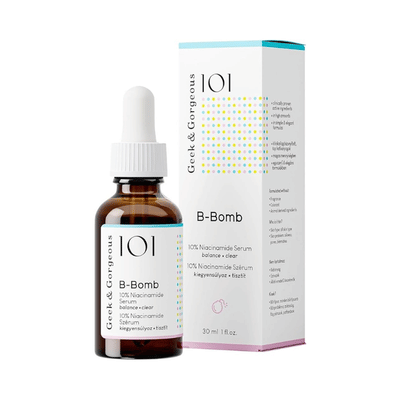
Geek & Gorgeous B-Bomb | 10% niacinamide
Excellent, affordable and uncomplicated.
The Shelf: I like it. I'm just not convinced everybody needs 10%.
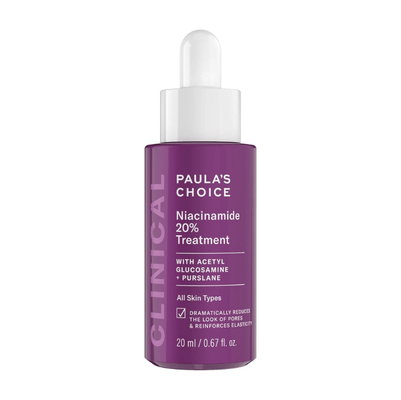
Paula's Choice Clinical Niacinamide | 20% niacinamide
The counter experiment.
The Shelf: 20% needs to show me why I shouldn't just use five.
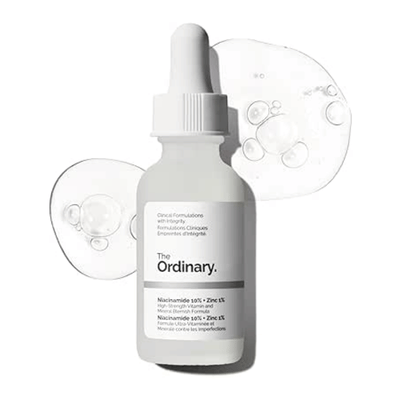
The Ordinary Niacinamide 5% Emulsion | 5% niacinamide
The one I really want to test.
The Shelf: could be a lovely example of less being plenty.
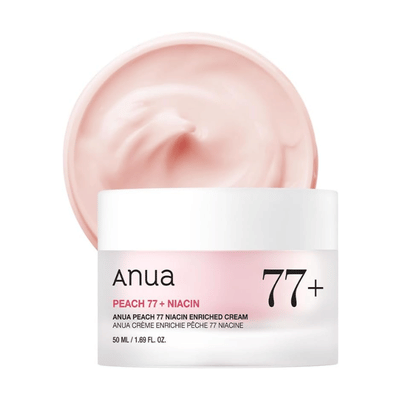
Anua Peach 70 Niacin | 5% niacinamide
Lots happening, but I finished it still questioning its purpose.
The Shelf: ingredients everywhere; why slightly harder to find.
Its role in pigmentation is particularly interesting because it isn't simply trying to copy Vitamin C. One of the pathways we understand is its ability to reduce the transfer of melanosomes, those little packages containing pigment, from melanocytes into surrounding skin cells. It is another reason I like thinking about pigmentation as a multi-pathway problem rather than looking for one miraculous brightening bottle.
But perhaps the bit I find most interesting is concentration.
There is good clinical data using 5% niacinamide, including improvements in fine lines, hyperpigmented spots, texture and red blotchiness after 12 weeks.
Five percent.
Which naturally means skincare has given us 10%, 15% and 20%, because apparently if something works we must keep adding more of it until somebody's face complains.
I don't have a problem with 10%. Plenty of people tolerate it beautifully. But if 5% already has meaningful evidence behind it, I think anything considerably higher needs to tell me what I'm getting in return.
Twenty percent needs to earn being twenty percent.
We've done this with acids, Vitamin A and Vitamin C. Bigger percentage, bigger promise. Eventually skincare becomes Top Trumps and your face doesn't care that you won.
There is another question too: do you actually need a niacinamide serum? B3 is already sitting inside moisturisers, pigment serums, SPF and barrier products. If you're getting it elsewhere at a useful concentration, another bottle isn't automatically adding something your skin was missing.
Then we have B5, usually appearing as panthenol, and I think this is where B becomes rather lovely. Panthenol isn't trying to dramatically resurface your skin or become the hero of your pigmentation plan. It is useful around hydration, soothing and barrier support.
It is the support act.
And the more skincare I review, the more interested I become in support acts. We spend an extraordinary amount of time discussing ingredients that change skin and considerably less discussing the ingredients that help skin tolerate all that changing.
Perhaps that's B's place in our ABC. Not boring. Useful.
And the products on The Shelf illustrate that rather perfectly.
Geek & Gorgeous B-Bomb gives us 10% niacinamide with Zinc PCA and sarcosine in a light, uncomplicated serum. I like that it knows exactly what it is. No botanical garden, no seventeen fashionable actives fighting for attention. Particularly interesting where oiliness and blemishes are part of the conversation.
Is it the bomb? I think it's very good. Strangely, though, it makes me want to try less.
The Ordinary Niacinamide 5% Face and Body Emulsion is therefore possibly the product I'm most curious about. Five percent, an emulsion rather than another watery serum, and suddenly we have the opportunity to ask whether a lower concentration in a different vehicle might actually be more useful for an awful lot of people.
At the other end sits Paula's Choice Clinical 20% Niacinamide Treatment. And I haven't decided I dislike it. I want to try it precisely because I want to know what 20% gives me that 5% doesn't.
Then there is Anua Peach 70 Niacin Serum, which I finished and still couldn't quite tell you what it added to my routine. Five percent niacinamide sits alongside peach extract, alpha-arbutin, panthenol, B12, hyaluronic acid, a Vitamin C derivative, ceramide and more. There is a lot happening, but a busy ingredient list doesn't automatically create a clearer why.
Finally, La Roche-Posay Cicaplast B5 Serum gives us the other B story: 10% panthenol in a hydration and barrier-focused formulation. No attempt to win the active Olympics. Just B being useful.
The Bs on The Shelf
Geek & Gorgeous B-Bomb | 10% niacinamide
Excellent, affordable and uncomplicated. The Shelf: I like it. I'm just not convinced everybody needs 10%.
The Ordinary Niacinamide 5% Emulsion | 5% niacinamide
The one I really want to test. The Shelf: could be a lovely example of less being plenty.
Paula's Choice Clinical Niacinamide | 20% niacinamide
The counterexperiment. The Shelf: 20% needs to show me why I shouldn't just use five.
Anua Peach 70 Niacin | 5% niacinamide
Lots happening, but I finished it still questioning its purpose. The Shelf: ingredients everywhere; why slightly harder to find.
La Roche-Posay Cicaplast B5 Serum | 10% panthenol
The support act. The Shelf: a reminder that helping the rest of your routine work well is a perfectly good reason for a product to exist.
Perhaps we haven't been sleeping on B because it isn't good enough.
Perhaps we've been sleeping on it because it isn't shouting loudly enough.
And the more skincare I review, the less interested I am in loud.
I want useful.
This feels much more like the right length and pace for B. It has one scientific lesson, one philosophical argument and five products. Nothing else needs to earn its place.
