What is microneedling, and how does it actually work?
Microneedling is one of the most talked-about treatments in skin health, but a lot of what's written about it online skips over what's actually happening in the skin. Here's the straightforward version, and where it fits into a wider treatment plan.
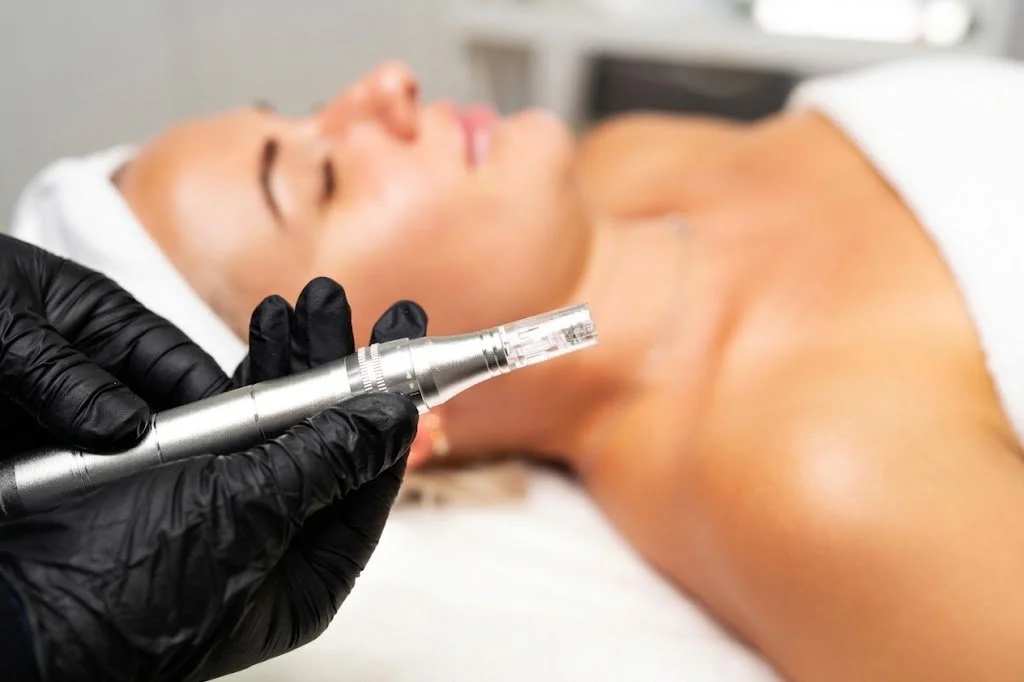
The basic mechanism
Microneedling uses fine, sterile needles to create controlled, microscopic injuries in the skin. That sounds more dramatic than it is in practice, the needles are extremely fine, and the injury is deliberately shallow and controlled. The skin responds to this in the same way it responds to any minor injury: it triggers a repair process.
That repair process is where the benefit comes from. As the skin heals, it produces new collagen and elastin, the proteins responsible for skin's structure and firmness. Over a course of treatment, this leads to gradual improvements in skin texture, tone, and firmness, sometimes described as dermal remodelling.
Why it's controlled, not random
The word "controlled" matters here. The depth, pattern, and intensity of the needling is adjusted to the skin being treated and the goal of the session, rather than applied the same way to everyone. This is one of the reasons we start with a consultation rather than booking straight into treatment: the right approach depends on your skin's condition, sensitivity, and what you're hoping to achieve.
What microneedling can be combined with
On its own, microneedling supports collagen induction and general skin structure. It's also commonly paired with an infusion, most often hyaluronic acid, a skin booster, or polynucleotides, delivered into the skin during the same session. Each of these does something different, hydration, elasticity support, or regenerative repair, so the right combination depends on what your skin needs. We've covered how the three compare in more detail separately.
What to expect afterwards
Microneedling creates a genuine, if minor, injury to the skin, so some redness, warmth, and sensitivity in the first day or so is normal and expected, similar to mild sun exposure. We've written a full guide to what to expect in the first 24 hours and how to look after your skin during that time.
Is it a one-off treatment?
Because the benefit comes from a repair process the skin carries out over time, microneedling tends to work best as a course rather than a single session. We explain why courses work better than one-off treatments in the next guide, along with how often sessions are typically spaced.
Schedule a Free Consultation
Every treatment plan at Level 7 begins with a conversation.
Your complimentary 20 minute consultation gives us time to understand your skin in detail, its history, its current condition, and your goals. From there, we build a personalised treatment plan and protocol, structured around your skin and how it responds over time.
This is not a sales appointment. It is the clinical foundation for everything that follows.